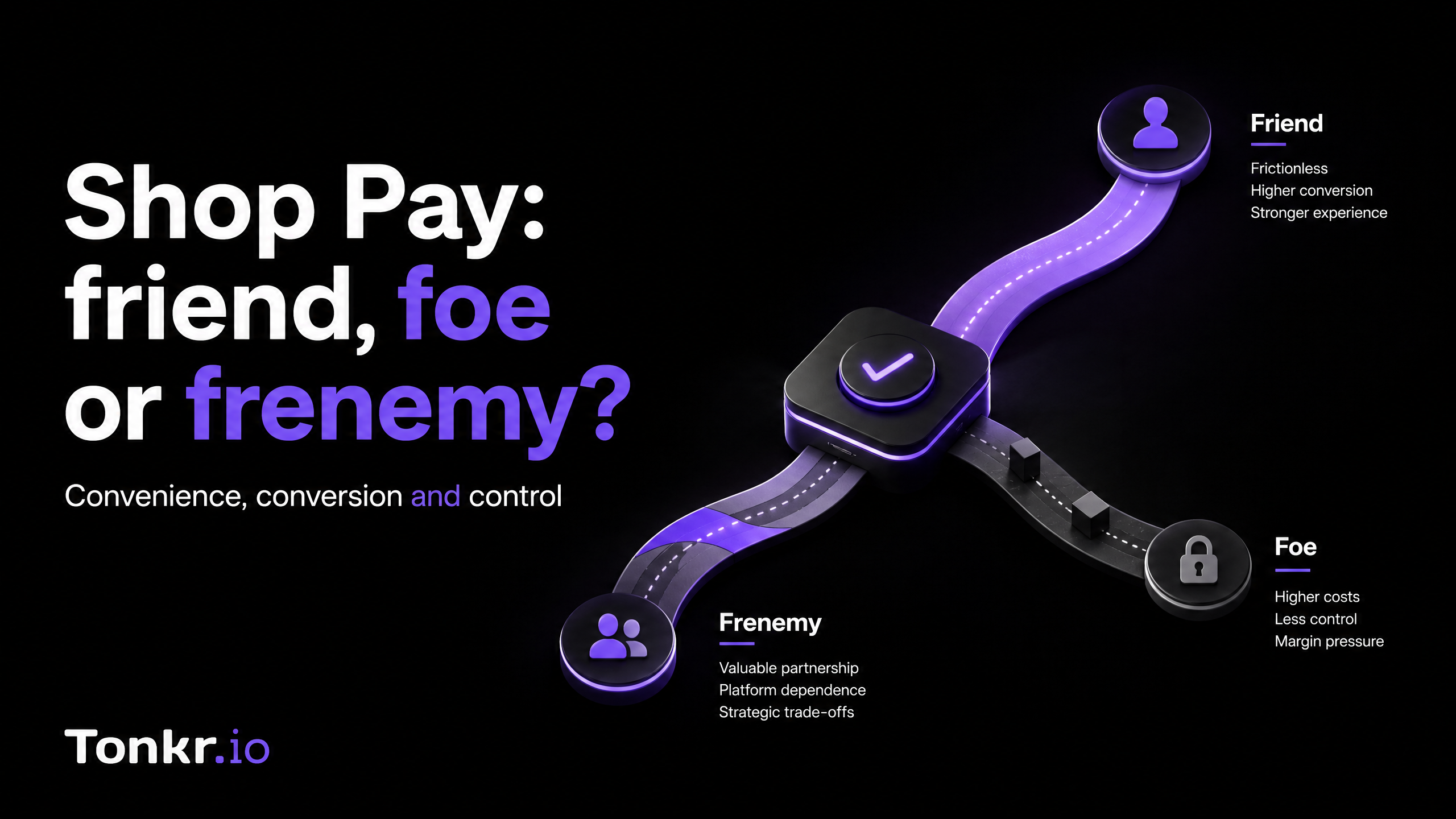
Shop Pay delivers high conversion but pairs it with elevated fees and structural lock-in; a wallet mix can capture most of the conversion without the dependency.
5 Key Facts
- 1Shop Pay's one-click express checkout reliably lifts conversion versus standard card entry.
- 2The conversion benefit comes bundled with higher effective fees than routed card processing.
- 3Shop Pay takes over checkout presentation, suppressing customer choice of other methods.
- 4Shopify Capital loans must be cleared before some provider changes become possible.Every Shopify merchant has felt the pull. Shop Pay promises the best-converting express checkout on the platform, and the numbers largely back that up. But the deal has three costs that do not appear on the pricing page, and by the time merchants notice them, leaving has become complicated.
What Shop Pay does well
One-click checkout with stored payment and shipping details removes the highest-friction step in the funnel. For returning customers the difference is measurable: fewer keystrokes, fewer abandoned baskets, higher completed orders. As a conversion tool it works.
The FOUR costs
1. The fees are real. ShopPay transactions price above routed card processing once wallet premiums and the platform's cut stack up. At low volumes the conversion lift outweighs the margin cost. Past roughly £500k a month, the maths starts to favour cheaper methods that convert nearly as well.
2. The lock-in is structural. ShopPay takes over checkout presentation. Customers see the purple button first and other methods second, which suppresses choice in a way that is hard to undo without design work. The platform is optimised for its own wallet, and competitors pay for inferior placement.
3. Exit has debts attached. Shopify Capital balances must be cleared before some provider changes become practical. Merchants have had to clear six-figure loans, in one known case £150k to £200k, before a provider switch could complete. Nobody reads that clause until they need it.4. Shop Pay (dis)loyalty scheme. Shop rewards shoppers for using its buy now and instalment plans with loyalty points and discounts. The idea is to grow its user base, then charge merchants for both access and promotion on its platform. Shop can drive your customers to your competitors with discounts and promotions, using:
- Mobile app and email notifications
- Product discounts, extra points and special repayment terms within the Shop app
- Promotions within Shop’s marketplace
- Within the Shop Pay checkout
The honest comparison: ShopPay at its best converts like an express wallet and costs like a premium one. PayPal Express, Apple Pay, and Google Pay together recover most of the express-checkout conversion without the fee stack or the dependency.
The wallet-mix alternative
Express checkout is not unique to Shop Pay. Apple Pay and Google Pay ship the same stored-credential one-tap experience natively on their devices, and PayPal Express remains the most recognised alternative brand at checkout. A configured mix gives customers one-tap options without handing checkout presentation to any single provider.

What to do about it
Measure Shop Pay's share of volume, its fee stack versus routed cards, and its incremental conversion versus your existing wallet coverage. If the premium exceeds what the incremental conversion earns, the mix is costing you money. If you are carrying Shopify Capital and contemplating a switch, price the clearance into the timeline.
Tonkr runs this comparison for free. Three months of statements, one page: what Shop Pay really costs you versus the wallet mix, and whether the numbers justify the dependency. If there is money on the table, we tell you where.